
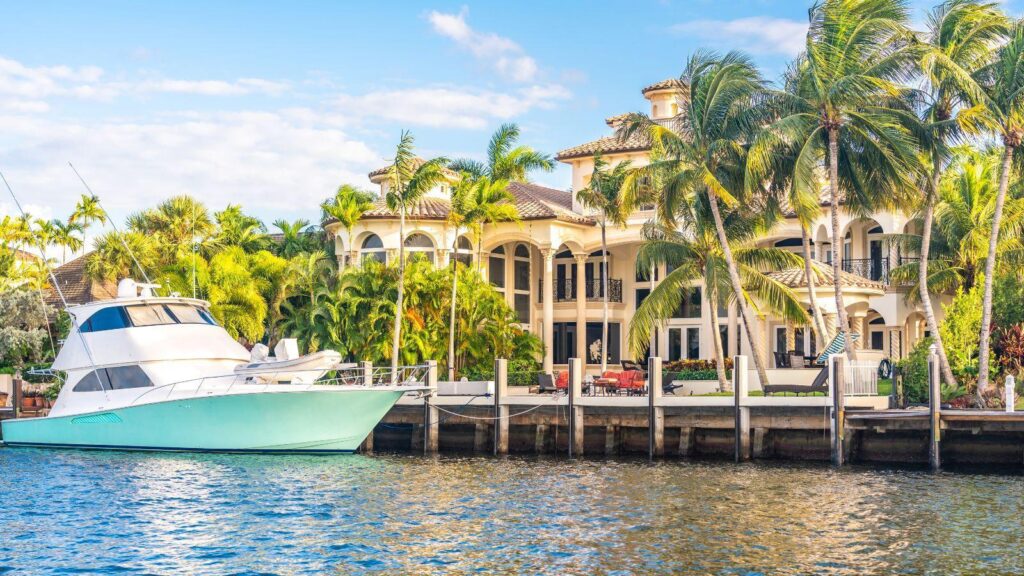
There’s something quietly satisfying about stepping out your back door and walking straight onto a dock you built yourself. Whether you’re working with a calm backyard pond or a stretch of lakefront property, a floating dock completely changes how you use and enjoy the water. Swimming, fishing, paddling, early morning coffee with your feet dangling over the edge — all of it becomes part of daily life once you have a solid platform out there. And the best part? You don’t need a contractor, a commercial dock company, or a runaway budget to make it happen. With good planning, the right materials, and a willing weekend, a DIY floating dock is well within reach for most homeowners.
This guide walks you through the entire build from start to finish — sizing and framing, attaching flotation, laying decking, setting your anchors, and making sure your water entry is safe for the whole family. Whether you’re sourcing reclaimed lumber or buying new, the approach stays the same: practical, affordable, and built to hold up for years.
Why Floating Docks Work Better Than Fixed Docks for Most Homeowners
A fixed dock is bolted to pilings driven into the lakebed or pond bottom, which means it stays at one height no matter what the water does. That works fine in environments with stable water levels, but most ponds and smaller lakes don’t cooperate. Seasonal rain, drought, and snowmelt can shift water levels by a foot or more over the course of a year. A floating dock rises and falls with those changes, so you’re never stepping down two feet to reach the water in late summer or watching your dock disappear under a spring flood.
Floating docks are also far more manageable to install without heavy equipment. You’re not driving posts into a muddy or rocky bottom, and you’re not hiring a barge. The structure sits on the water surface, supported by foam billets or sealed plastic barrels, and is held in position by an anchoring system rather than a rigid foundation. That means you can install it yourself, shift it if needed, and pull it out of the water before winter in an afternoon.
From an environmental standpoint, floating docks are the gentler option. Because the dock floats rather than resting on the bottom, you’re not smothering aquatic vegetation or disrupting the lakebed. That matters ecologically, and it also tends to simplify the permitting process in many states and provinces where waterfront construction is regulated.
Planning Your Dock: Size, Layout, and Material Choices
How Big Should Your Floating Dock Be?
Size depends on how you plan to use the dock. A clean swimming platform for a family of four typically works well at 8 feet by 12 feet. If you want to tie up a small boat, add kayak storage, or set out a few chairs, bumping that up to 8 by 16 or 10 by 20 gives you real working room. Keep in mind that a larger dock means more flotation, heavier anchoring, and a more involved build — so there’s a practical ceiling to how big you should go on a first DIY project. For most backyard pond and small lakefront applications, an 8×12 or 8×16 platform is the sweet spot. It’s spacious enough to be genuinely useful and light enough that two people can manage it during installation.
Choosing Sustainable and Reclaimed Materials
One of the most rewarding aspects of this build is making smart material choices. Reclaimed lumber — salvaged from old barns, demolished decks, or construction sites — is an excellent option for the dock frame, as long as the pieces are structurally sound and free from rot. Old-growth Douglas fir and tight-grained hardwoods both hold up well to moisture when properly sealed, and using reclaimed stock keeps costs down while giving the dock a character that new lumber simply can’t replicate.
For decking, composite boards made from recycled wood fiber and plastic are worth the extra upfront investment. They don’t splinter, they resist moisture and UV exposure, and they stay looking clean for years without much attention. Cedar is another strong choice — naturally rot-resistant, lightweight, and sustainably harvested from responsibly managed forests. What you want to avoid is standard construction-grade pine for any part of the dock that will see constant water exposure. It deteriorates quickly and can become a genuine safety issue within a few seasons. If you’re using pressure-treated lumber for the frame, choose ACQ or copper azole treated stock rather than older CCA-treated wood, which contains arsenic and is no longer recommended for residential use near water.
Tools and Materials You’ll Need
Before you cut a single board, make sure you have everything on hand. Most of this build uses tools you already own, and the specialty items — foam billets and anchor hardware — are widely available at marine supply stores.
- Circular saw or miter saw, drill/driver, speed square, and a tape measure
- 2×8 or 2×10 lumber for the outer frame and interior joists (pressure-treated or reclaimed hardwood), plus composite or cedar decking boards for the surface
- Galvanized or stainless steel hardware: lag bolts, carriage bolts, deck screws, and joist hangers
- High-density polyethylene foam billets or sealed HDPE float drums for flotation; heavy-duty anchor chain, eyebolts, and auger-style lake anchors or deadman weights
Wherever possible, choose hot-dipped galvanized or stainless steel hardware throughout the build. Zinc-plated hardware rusts quickly in wet environments and will stain your decking within a season. It’s a small upgrade that pays for itself many times over.
Step 1: Building the Frame
The frame is the backbone of your dock, and getting it square and solid from the start saves you trouble at every stage that follows. Cut your outer frame pieces first — two long side boards and two short end boards at your chosen dimensions. For an 8×12 dock, that’s two 12-foot boards and two 8-foot boards. Use 2×8 or 2×10 stock for these outer members, since the depth is what gives the frame the stiffness it needs under load.
Assemble the outer rectangle and fasten each corner with two or three 3/8-inch galvanized carriage bolts for maximum rigidity. Before you go any further, check the frame for square by measuring diagonally from corner to corner — both measurements need to match. Even an inch of deviation will compound as you add interior framing, so this is worth taking the time to get right.
Once the outer frame is square, add interior joists on 16-inch centers running across the width of the dock and connect each one to the outer frame using joist hangers. This creates a rigid ladder-style structure that distributes weight evenly across the platform and prevents any flex or bounce in the finished surface. A bouncy dock feels unstable underfoot and puts unnecessary stress on the flotation attachments over time.
Step 2: Attaching the Flotation
Flotation is what keeps your dock on top of the water rather than in it, so this step deserves careful attention. Expanded polystyrene foam billets — often called dock foam or EPS foam — are the most practical choice for DIY floating docks. They’re rot-proof, won’t absorb water, require virtually zero maintenance, and are available at marine supply stores in a range of sizes and buoyancy ratings.
Encase the foam billets in a frame of pressure-treated 2x4s or wrap them in geotextile fabric to protect against UV degradation and prevent animals from chewing into them over the winter. Attach the encased foam to the underside of the dock frame using threaded rod and large washers, drawing the flotation tight against the frame so it doesn’t shift or rattle under load. Distribute the foam evenly side to side and end to end — an unbalanced dock tilts toward the heavy end, which is both uncomfortable and hard on the structure.
As a general rule, one cubic foot of EPS foam provides approximately 60 pounds of buoyancy. Calculate the weight of your frame, decking, and anticipated live load — roughly 40 to 50 pounds per square foot for a standard platform — and make sure your total flotation capacity gives you at least a 30 percent safety margin above that number. For a typical 8×12 dock with standard framing and composite decking, you’ll usually need 12 to 16 cubic feet of foam distributed evenly under the frame.
Step 3: Laying the Decking
With the frame built and flotation attached, flip the dock right-side up — easiest to do at the water’s edge with a second set of hands — and start laying your decking boards. Run them perpendicular to the interior joists and leave a consistent 1/4-inch gap between each board for drainage and expansion. This gap is especially important with composite decking, which expands noticeably in warm weather. Boards set tight against each other in spring will buckle by midsummer.
Pre-drill each board before fastening to prevent splitting at the ends, and consider using hidden deck fasteners if you want a surface free of exposed screw heads. For cedar or other natural wood, countersink your screws slightly and fill with a waterproof wood filler to reduce moisture intrusion at the fastener holes. Once all the boards are down, cut any overhang flush with the frame, sand any rough edges, and chamfer any sharp corners. The walking surface should be smooth and even, with no protruding hardware or high spots that could catch a bare foot. Apply two coats of a marine-grade exterior finish to natural wood surfaces at this stage, working extra product into the end grain of each board where moisture is most likely to enter.
Step 4: Anchoring Your Floating Dock in Place
A floating dock that drifts freely with every breeze or passing boat wake is more of a liability than a luxury. Proper anchoring keeps the dock in a consistent position relative to the shore while still allowing it to rise and fall with the water level — that’s the balance you’re aiming for.
For a small backyard pond, the most practical approach is running a pair of galvanized anchor chains from eyebolts on the far corners of the dock to anchored stakes or deadman anchors buried on the shoreline. A deadman anchor is simply a heavy object — a concrete block, a large treated timber, or a commercial deadman plate — buried below grade and connected to the chain. For deeper water or open lakefront applications, spiral screw-in lake anchors are threaded directly into the lakebed using a steel rod and connected to the dock with a length of chain. They hold exceptionally well in sandy or soft-bottom lakes and are removable at the end of the season if you want to pull everything out for winter.
Use chain rated for at least three times the anticipated load and attach it with screw-pin shackles rather than simple hooks so it can’t work loose over time. Allow enough chain length to accommodate expected water level variation — typically two to three times the maximum water depth — so the dock can float freely without pulling against the anchor during high-water periods. A taut chain in high water puts constant stress on your eyebolts and frame connections, which will eventually cause damage you won’t notice until something fails.
Step 5: Setting Up Safe Water Entry
Getting in and out of the water is one of the most overlooked parts of dock design, and it’s where most dock-related injuries occur. Jumping from the edge puts stress on the structure, splashes water onto the decking surface, and leaves you scrambling to get back up without a grip point. A dedicated water entry setup solves all of that cleanly.
Once your dock platform is secured, adding a sturdy boat ladder gives you and your family a safe and easy way to slip in and out of the water without disturbing the dock structure. Most dock ladders mount to the frame with two or four bolts and fold up flat when not in use, keeping the deck surface clear when nobody’s swimming. Look for a ladder with wide, non-slip rungs and a weight rating that accommodates your heaviest family member with room to spare — this is not the place to cut corners on quality.
For the entry point itself, consider cutting a 24-inch notch into one corner of the decking so the ladder sits flush with the dock edge rather than protruding beyond the frame. Frame the opening with additional blocking between the adjacent joists to maintain structural integrity around the cutout. A dock cleat or grab handle mounted just above the ladder is a simple finishing detail that makes a real difference, especially for younger swimmers who need a bit of extra support pulling themselves up onto the dock.
Finishing Touches and Long-Term Maintenance
A well-built floating dock is genuinely low-maintenance, but a little seasonal attention goes a long way toward protecting the work you’ve put in. If you live in a climate where the water freezes in winter, pull the dock from the water before ice forms. Even securely anchored docks can be damaged or destroyed by shifting ice, and most floating docks are light enough to drag ashore and store flat for the cold months without any special equipment.
Each spring, before the dock goes back in the water, run through a quick inspection:
- Check all hardware for corrosion and replace any fasteners showing signs of rust or deterioration
- Inspect the foam billets or float drums for UV cracking, physical damage, or evidence of animal intrusion over the winter
- Examine the anchor chain and shackles for wear, and re-tighten any connections that have worked loose
- Re-apply a coat of marine-grade finish to any natural wood surfaces that look dry, gray, or weathered
Composite decking requires virtually no finishing maintenance beyond an occasional scrub with a deck brush and mild soap. Natural wood surfaces benefit from a fresh coat of exterior finish every two to three years depending on sun exposure and how harsh your winters get. Adding a rubber dock bumper along the shoreline-facing edge is a small detail worth doing — it softens the impact when wind or waves push the dock against rocks or a concrete edge, protecting the frame from years of cumulative wear that you won’t notice until it becomes a problem.
The Real Payoff of Building It Yourself
By the time you’ve set the last decking board and run the anchor chain, what you’ve built is more than a platform on the water. It’s a gathering place — somewhere to fish with your kids on a summer morning, host an afternoon swim, or sit quietly and watch the light change across the water at the end of a long day. A floating dock doesn’t have to cost a fortune or require a professional crew. With sound materials, a clear plan, and a willingness to put in the work, you’ll end up with something that serves your family well for decades and sits comfortably among the best projects you’ve ever taken on.